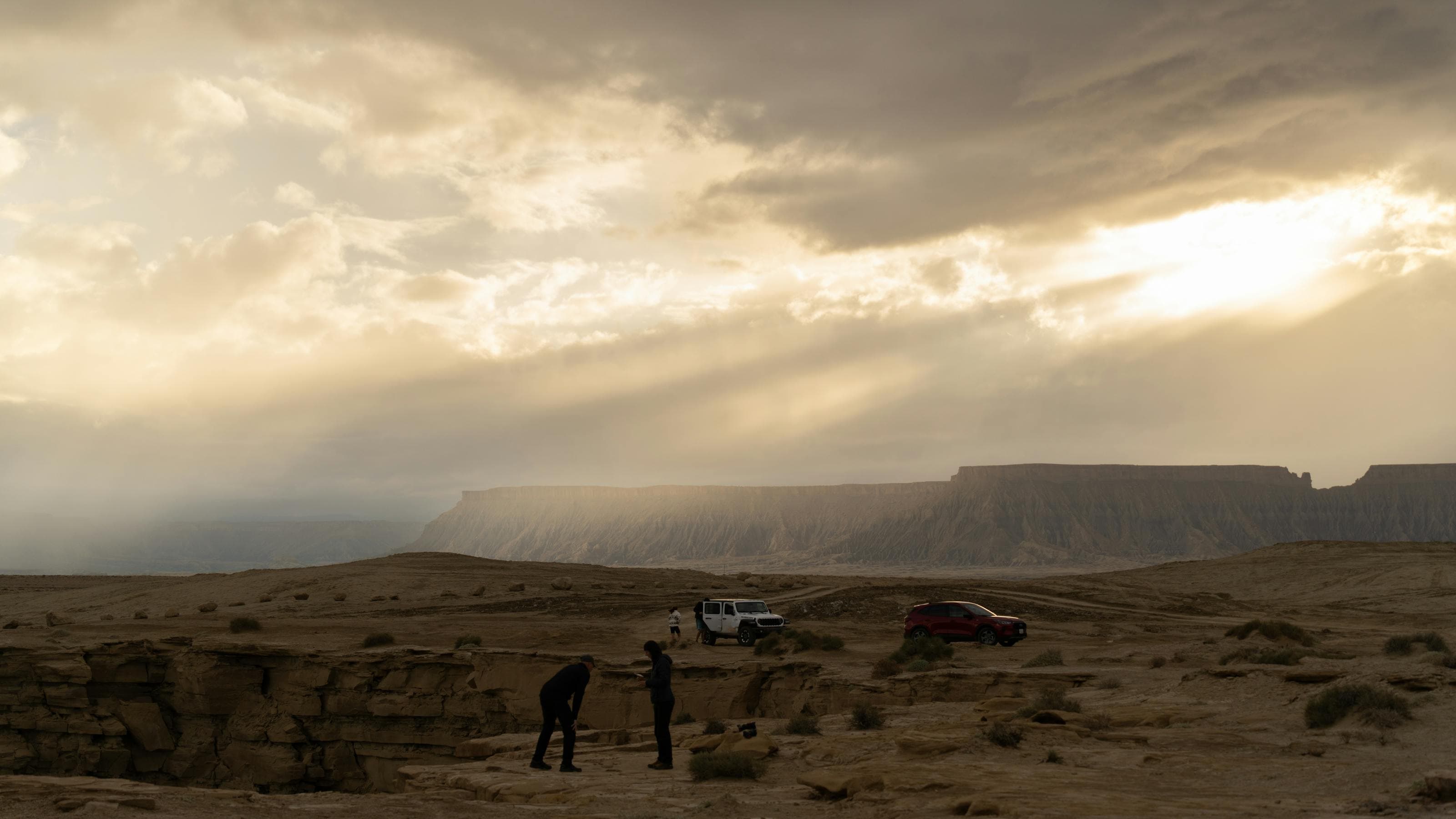
How the World Travels Now: Memory, Meaning, and Movement
The global travel landscape of 2025 is defined by a tension between frictionless tech and a growing human craving for texture, meaning, and memory. This report maps the macro forces, psychology, and behavior reshaping how we move.
How the World Travels Now: Memory, Meaning, and Movement
Executive Summary
The global travel landscape of 2025 is defined by a profound and pervasive tension between the technological imperative for frictionless efficiency and a deepening human psychological yearning for friction, texture, and meaning. Following the volatile "revenge travel" era of the early 2020s, the industry has settled into a complex equilibrium characterized by "cautious optimism" and strategic recalibration. The traveler of 2025 is no longer merely a consumer of destinations but an architect of identity, navigating a world where economic uncertainty, climate anxiety, and technological saturation have fundamentally altered the "why" and "how" of movement.
This report, How the World Travels Now, provides an exhaustive analysis of the state of travel in 2025. It synthesizes macroeconomic data, cognitive psychology, and consumer behavior research to reveal a bifurcated reality. On one hand, we observe the rapid ascendancy of "Agentic AI" and "Delegated Discovery," where algorithms manage the logistics of movement with unprecedented precision. On the other, there is a robust "Analog Renaissance"—a deliberate regression to film photography, paper maps, and physical journaling—driven by a subconscious recognition that digital convenience often erodes organic memory formation.
Our analysis reveals that the modern traveler is navigating a "Digital-Analog Paradox." They demand hyper-efficiency in transaction (booking, payments) but increasingly reject efficiency in experience, seeking instead the "cognitive friction" that anchors memory. This report also uncovers the "Say-Do Gap" in sustainability, where stated values diverge sharply from purchasing behavior due to economic pressures and psychological distancing. Furthermore, we explore the shift from public performance on social media to "Dark Social" sharing, a retreat into private communities that signals a move from status signaling to authentic connection.
Through the lens of memory science—specifically the "Photo-Taking Impairment Effect" and the "Peak-End Rule"—we demonstrate how the mechanisms of capturing a trip are reshaping the memories of the trip itself. As we look toward 2030, the industry must grapple with these dualities: providing the seamlessness travelers need while preserving the friction they crave.
1. The Macro-Architecture of Travel in 2025: Economics and Geopolitics
1.1 The Resilience of Demand in "Interesting Times"
The travel industry in 2025 operates under the shadow of an ancient, apocryphal curse: "May you live in interesting times". These times are indeed interesting, characterized by a complex interplay of resilience and risk. After a smooth trajectory at the year's commencement, the sector encountered turbulence driven by trade tensions, tariff policies, and shifting macroeconomic signals. Yet, the fundamental desire to move remains steadfast. Skift Research’s Travel Health Index, a composite measure tracking 88 indicators across 22 countries, settled at a reading of 102 by May 2025, indicating a 2% growth over the previous year. This figure represents a stabilization—a "soft landing" after the hyper-growth of the post-pandemic recovery.
Global tourism is thriving, but the recovery is unevenly distributed, creating a "multi-speed" global map. International tourist arrivals in the first quarter of 2025 grew by 3% compared to 2019 levels and 5% year-over-year. This sustained demand persists despite rising geopolitical friction, suggesting that travel has transitioned from a discretionary luxury to a non-negotiable component of modern lifestyle for the global middle class. However, the geographic contours of this growth tell a story of shifting power dynamics.
Region Recovery Metric (vs. 2019) Market Dynamics & Strategic Outlook Middle East +44% The region is the undisputed leader in growth, driven by massive infrastructure investment (e.g., Saudi Arabia’s giga-projects), extended visa-free travel regimes, and a strategic pivot to sports tourism.
Europe +5% Growth is moderate but stable, buoyed by strong intra-regional demand. However, the continent faces acute pressures from overtourism regulations and climate-related shifts in travel patterns (e.g., "Coolcations").
Americas +3% The recovery is anchored by robust domestic demand in the U.S., although high service costs and inflation act as headwinds for inbound tourism. The strength of the dollar continues to influence outbound flows.
Asia-Pacific -8% The region remains the laggard, primarily due to the slower-than-anticipated rebound of the Chinese outbound market and capacity constraints in aviation. However, visa reforms in Southeast Asia are stimulating intra-regional movement.
Africa +16% Showing significant resilience, driven by diaspora travel and increased connectivity within the continent.
Data Source: UN Tourism World Tourism Barometer and Skift Research.
1.2 The Corporate Travel Recalibration
A significant divergence has emerged between the leisure and corporate sectors, challenging the assumption that business travel would return to a pre-pandemic "normal." In 2024, the corporate narrative was one of reactivation and redefining value. By 2025, this has evolved into nuance and caution. While smaller companies continue to expand travel budgets aggressively, larger organizations—those with travel spends exceeding $7.5 million—are pulling back. Deloitte’s data indicates that one in five large corporations expects travel budget declines in 2025, a sharp reversal from previous years where large entities led the recovery.
This retraction is not merely a cost-cutting exercise; it is a structural transformation of why business professionals travel. The "corporate travel incidence rate"—the percentage of employees traveling for work—dropped from 36% in 2024 to 31% in 2025. Routine internal meetings and low-stakes client check-ins have permanently migrated to virtual platforms. In their place, high-stakes interactions have taken precedence. "Training and Learning & Development" has emerged as a top driver for travel growth, now on par with client acquisition. This suggests a "flight to quality" in corporate movement: companies are willing to invest in travel when it fosters culture, facilitates complex learning, or closes significant deals, but the era of the "road warrior" accumulating miles for routine maintenance is ending.
Furthermore, the "Great Reshuffle" of work models has entrenched the "bleisure" (business + leisure) phenomenon, or what is now more accurately termed "blended travel." With remote work stabilizing as a norm for many sectors, the distinction between a business trip and a vacation continues to blur. However, the financial backing for these trips is becoming strictly delineated, with companies scrutinizing ROI more rigorously than ever before.
1.3 The Economics of the Value-Driven Traveler
For the leisure traveler, 2025 is the year of the "Value-Driven" mindset. The exuberant, price-insensitive spending that characterized the "revenge travel" wave has receded, replaced by a sophisticated, frugal hedonism. Americans were projected to spend a record $226 billion on summer vacations, yet this top-line figure masks deep shifts in behavior. Travelers are not cancelling trips; they are micro-adjusting them to fit constrained budgets.
The "trade-down" effect is visible across multiple data points. Travelers are opting for driving over flying for short-haul distances, choosing domestic destinations over international ones, and reducing spend on merchandise while protecting spend on experiences. There is a conscious decoupling of "luxury" from "cost." Luxury is increasingly defined by exclusivity of access and richness of experience rather than the opulence of accommodation.
This value sensitivity is also driving the "New Heydays" trend—a nostalgia-fueled return to familiar destinations. 90% of British travelers, for example, are revisiting places from their youth. In an uncertain economic climate, returning to a "known good" destination is a rational risk-mitigation strategy. It guarantees a return on emotional investment, hedging against the potential disappointment and high cost of experimenting with a new location. Nostalgia, in this economic context, is a safety mechanism.
2. The Cognitive Mechanics of the Journey: Memory and Perception
To truly understand how the world travels in 2025, we must look beyond economic data to the cognitive processes that underpin the travel experience. The intersection of memory science and tourism has become a critical frontier, revealing that the tools we use to capture a trip often determine the memories we keep.
2.1 The Photo-Taking Impairment Effect
A central paradox in modern travel is the relationship between photography and memory. We take photos to remember, yet cognitive research consistently demonstrates a "photo-taking-impairment effect." Studies show that participants who photograph objects are less likely to remember details about them compared to those who simply observe them.
This phenomenon is driven by two primary cognitive mechanisms:
Cognitive Offloading: When a traveler snaps a photo, they subconsciously "offload" the responsibility of remembering the scene to the camera (the "prosthetic memory"). The brain, recognizing that the information is externally stored, deprioritizes the organic encoding of the memory.
Attentional Disengagement: The act of managing the device—framing, focusing, adjusting exposure—diverts attentional resources away from the sensory experience of the moment. The photographer remembers the process of taking the photo rather than the visual and emotional details of the scene itself.
However, this impairment is not absolute. Research indicates that when photography requires "focused attention"—such as zooming in on specific details or engaging in deliberate creative composition—the impairment effect can be mitigated or even reversed. This finding is crucial for understanding the resurgence of analog photography (discussed in Section 3), which enforces a slower, more deliberate engagement with the subject, potentially rescuing the memory from the ephemeral nature of the digital snapshot.
2.2 The Peak-End Rule and Experience Architecture
The "Peak-End Rule," a psychological heuristic identified by Daniel Kahneman, asserts that individuals judge an experience largely based on how they felt at its peak (the most intense point, whether positive or negative) and at its end, rather than the net average of every moment. In the context of travel, this explains why a trip filled with minor inconveniences can still be remembered as "perfect" if it contained one moment of transcendent awe and a smooth, comfortable journey home.
Travel providers in 2025 are increasingly engineering experiences to exploit this cognitive bias. "Experience Architecture" now prioritizes:
The Peak: Curating a singular, overwhelming moment of awe—a private sunrise viewing, a summit hike, or an exclusive culinary event—that serves as the emotional anchor of the narrative.
The End: Ensuring the final interaction—checkout, the transfer to the airport, or the unboxing of a souvenir—is seamless and emotionally resonant.
This rule illuminates the disconnect between the experiencing self (who may feel the heat, the fatigue, or the weight of luggage) and the remembering self (who constructs the retrospective narrative). If the peak and end are managed effectively, the "forgettable" friction of the middle fades, leaving a polished, positive memory trace.
2.3 Mental Time Travel and Autonoetic Consciousness
Travel is fundamentally an exercise in "Mental Time Travel," a capability of the human brain linked to "autonoetic consciousness"—the ability to place oneself in the past or future. The hippocampus, crucial for spatial navigation, is also the engine of episodic memory. When we travel, we are exercising this system intensely, building new "cognitive maps" of the world.
However, the reliance on GPS navigation threatens to atrophy this capability. Research shows that using GPS for turn-by-turn navigation (an "egocentric" strategy) leads to reduced hippocampal activity compared to using physical maps (an "allocentric" strategy). The map user builds a holistic understanding of the environment, connecting neighborhoods and landmarks into a coherent mental model. The GPS user, by contrast, moves through space in a series of disconnected instructions ("turn left in 200 feet"), arriving at the destination without understanding where they are. This "frictionless" arrival comes at the cost of spatial memory and serendipity—the accidental discoveries that occur when one is forced to read the landscape.
3. The Digital-Analog Paradox: Friction vs. Flow
The defining technological trend of 2025 is not the total dominance of digital tools, but a sharp bifurcation: the delegation of logistics to AI and the reclamation of experience through analog mediums. Travelers are seeking to automate the hassle while simultaneously re-introducing friction into the meaning-making process.
3.1 The Analog Renaissance: Film and Paper
Counter-intuitively, in an era of AI-enhanced smartphone cameras, 2025 is witnessing a robust revival of analog tools. This "Analog Renaissance" is driven by Gen Z and Millennials who are rejecting the algorithmic perfection of digital feeds in favor of the "authentic imperfections" of film.
Friction as Value: Film photography reintroduces risk and cost to memory-making. Because film is finite (24 or 36 exposures) and expensive to develop, each shot requires intention. This "earned" image carries significantly more emotional weight than one of 5,000 digital bursts stored in the cloud.
Aesthetic Validity: The grain, light leaks, and unpredictability of film signal "reality." In a world of deepfakes and AI slop, the physical negative is proof of presence. It validates that the traveler was physically there, interacting with light and chemistry, not just processing data.
Delayed Gratification: The delay between taking the photo and seeing the result (development) re-introduces anticipation, a key component of psychological pleasure often lost in the instant-feedback loop of digital screens.
Similarly, physical travel journaling has persisted alongside digital apps. While digital journals offer searchability and multimedia integration, paper journals offer a tactile, distraction-free space for reflection. The act of handwriting is shown to aid memory retention and emotional processing in ways that typing does not, creating a "hand-to-mind" connection that deepens the travel experience.
3.2 Digital Hoarding and the "Memory Palace" We Never Visit
The antithesis of the analog trend is "digital hoarding." The average smartphone user in 2025 stores thousands of photos they rarely revisit, creating a "digital warehouse" rather than a curated album. This accumulation creates a "paradox of abundance": the more we document, the less we remember.
The "Photo Taking Paradox" research suggests a cruel irony: while taking photos increases immediate satisfaction (engagement), it decreases the intention to revisit the destination. The traveler feels they have "consumed" and "banked" the experience, diminishing the perceived utility of returning. Furthermore, the anxiety of managing this digital clutter—the fear of deleting a "precious" memory that is actually just a blurry screenshot—adds a layer of low-grade stress to the post-trip experience.
3.3 The Rise of "Dark Social" Sharing
The performative era of public broadcasting on social media is waning, replaced by "Dark Social"—private sharing through encrypted channels like WhatsApp, Discord, Slack, and DMs.
Trust over Reach: Travelers increasingly distrust public influencer recommendations, which are often viewed as sponsored or inauthentic. The most influential travel advice now comes from closed peer groups where trust is high and the signal-to-noise ratio is favorable.
Narrowcasting: Sharing in private groups allows for more honest, vulnerable, and specific communication. It is a move away from "broadcasting" status to the world ("Look where I am") to "narrowcasting" connection with close friends ("You would love this specific café").
Gatekeeping as Virtue: A growing counter-trend involves not geotagging locations publicly to protect "hidden gems" from overtourism. Sharing these locations only within Dark Social circles transforms travel knowledge into a form of protected subcultural capital, valuing preservation over clout.

%20copy%202.webp&w=384&q=75)
%20copy%203.webp&w=384&q=75)

Your trips deservemore than a camera roll
.webp&w=96&q=75)
4. The Aesthetics of Experience: From Curation to Chaos
The visual language of travel is undergoing a radical shift, moving away from the polished perfection of the "influencer aesthetic" toward a style that signals raw, unfiltered reality.
4.1 The "Photo Dump" and Chaotic Authenticity
The dominant social media format for travel in 2025 is the "Photo Dump"—a carousel of images that deliberately mixes high-quality scenic shots with blurry outtakes, memes, and mundane details (e.g., a half-eaten meal, a street cat, a messy hotel room).
Psychology of the Dump: This trend performs a rejection of curation while being, paradoxically, highly curated itself. It signals, "I was too busy living the moment to perfect the photo." It prioritizes vibe and mood over clear documentation.
Relatability vs. Envy: Unlike the "envy-inducing" posts of the 2010s, photo dumps aim for relatability. They invite the viewer into the texture of the trip—the chaos, the humor, the imperfection—rather than just the highlights.
Aesthetic Tribes: Specific aesthetics like "Main Character Energy" (cinematic cityscapes, Tokyo/Seoul) and "Dark Academia" (moody, historic, Edinburgh/Kyoto) drive destination choice. Travelers are not just booking a location; they are booking a backdrop for a specific narrative persona.
4.2 Inclusive Identity and the "Traveling in Color" Reality
The aesthetic of travel is also becoming more inclusive, though significant gaps remain. The "Traveling in Color" study highlights that for BIPOC travelers, safety is a non-negotiable priority, ranking higher than for other demographics. 95% of BIPOC respondents ranked feeling safe—emotionally and physically—as their top concern.
There is a direct economic implication to this: BIPOC travelers are willing to spend significantly more (up to $215 more per week) on destinations and brands that demonstrate authentic support for diversity and inclusion. However, a "Representation Gap" persists; 55% of BIPOC respondents feel less represented in travel marketing. When travelers do not see themselves reflected in the visual narrative of a destination, they simply do not visit. This confirms that representation is not just a moral imperative but a critical economic driver in 2025.
5. Identity, Meaning, and Transformation
Travel in 2025 is increasingly viewed as a vehicle for "Narrative Identity"—the internalized, evolving life story that provides a person with purpose and unity. We do not merely travel to see places; we travel to construct chapters in our autobiographies.
5.1 Eudaimonic vs. Hedonic Travel
A major psychological shift is occurring from hedonic well-being (seeking pleasure, relaxation, and immediate enjoyment) to eudaimonic well-being (seeking meaning, self-realization, and personal growth).
Hedonic Travel: The "flop and drop" beach vacation remains popular for decompression, but it is viewed as "maintenance" rather than "growth."
Eudaimonic Travel: This involves "Transformative Travel"—trips designed to challenge the self, learn a new skill, or connect with heritage. The demand for "spiritual side-quests" (silent retreats, psychedelic therapy, pilgrimage walks) reflects this search for self-actualization.
5.2 "New Heydays" and the Comfort of the Past
In a volatile world, the past acts as a psychological safe harbor. The "New Heydays" trend sees a surge in travelers revisiting destinations from their youth or locations tied to personal milestones.
Rosy Retrospection: This behavior exploits the cognitive bias where past events are remembered more fondly than they were experienced. Returning to a childhood holiday spot allows the traveler to access this "banked" happiness.
Intergenerational Bonding: These trips are often multi-generational, serving as a mechanism to transmit family lore and shared identity to younger generations. It is an act of stabilizing the family narrative against the disruption of the present.
5.3 Spiritual Sidequests and Ancestral Roots
The search for "Self-Defining Memories"—intense, emotionally charged events that become central to identity—is driving niche tourism. Ancestry travel, where individuals visit the towns of their forebears, is booming. Similarly, "Spiritual Sidequests" involve integrating moments of profound introspection (e.g., visiting a specific temple, engaging in a genealogy workshop) into broader itineraries. This reflects a desire to ground the self in a lineage or a spiritual tradition, providing a counter-weight to the rootlessness of digital life.
6. The Sustainability Paradox: The "Say-Do" Gap
Sustainability in 2025 is characterized by a stark cognitive dissonance known as the "Say-Do Gap." While travelers express high concern for the environment, their purchasing behavior often fails to align with their values.
6.1 The Gap by the Numbers
While 84% of global travelers claim sustainability is important, and 75% say they want to travel more sustainably, actual booking data tells a different story.
Cost as the Barrier: Over 50% of travelers cite cost as the primary decision factor. Even when sustainable options are price-neutral, the perception of a "green premium" deters adoption.
Consumer Archetypes: Research identifies distinct segments such as the "Hopeful Worrier" (who believes in individual action and makes changes) versus the "Climate Change Agnostic" and "Action Avoider" (who place responsibility entirely on governments/corporations). The latter groups comprise a significant portion of the market, rendering voluntary carbon offsets largely ineffective.
Barriers to Action: The gap is exacerbated by a lack of clarity (48% don't understand what makes a trip sustainable) and skepticism about authenticity (32% question green claims).
6.2 "Coolcations" and Eco-Luxury
Where sustainability is succeeding, it is often rebranded as "Luxury" or "Wellness," decoupling it from sacrifice.
Coolcations: The rise of travel to cooler climates (Scandinavia, Antarctica, Scotland) is a direct adaptation to climate change (heatwaves in Southern Europe). However, it is marketed as a lifestyle choice—seeking the luxury of cool air, silence, and empty landscapes.
Low-Tech Luxury: High-end resorts are selling "disconnection" as a premium product. "Digital detox" retreats and "silent travel" experiences command high prices, framing the absence of technology (and its carbon footprint) as the ultimate indulgence.
Regenerative Travel: Niche segments are moving beyond "leaving no trace" to "leaving it better," participating in coral restoration or citizen science projects. This appeals to the eudaimonic traveler seeking purpose, allowing them to justify the carbon cost of the flight through the positive impact of the stay.
7. The Technological Horizon: Agentic AI and the Trust Deficit
While experiences drift toward the analog, the infrastructure of planning is becoming hyper-digital. 2025 marks the transition from "Search" to "Agency," where travelers employ AI agents to curate and book complex itineraries.
7.1 Delegated Discovery and Hyper-Personalization
Travelers are beginning to delegate the "search" phase to AI agents. These agents analyze vast datasets of personal preferences to predict needs before they are articulated. The promise is "Delegated Discovery"—an AI that knows you prefer a hotel with a specific type of gym or high-speed Wi-Fi and books it automatically.
This shifts the industry from a "pull" model (traveler searches for options) to a "push" model (AI proposes a complete itinerary). It offers hyper-personalization at scale, theoretically reducing the cognitive load of planning.
7.2 The Trust Deficit: AI Hallucinations and Slop
However, this agentic future is hampered by a significant trust deficit. "AI Hallucinations"—where models confidently invent landmarks, transport routes, or opening hours—remain a critical risk. Hallucination rates in some popular models range from 37% to as high as 77% for specific fact-based tasks.
Phantom Destinations: There have been documented cases of tourists being directed to "phantom destinations" (e.g., non-existent towns in Peru or fake landmarks in Beijing) by AI planning tools.
AI Slop: The flood of low-quality, AI-generated travel content ("slop") clogs search results with generic, soulless advice, making it harder for travelers to find authentic human insights. This has inadvertently strengthened the value of "Dark Social" human recommendations.
7.3 Predictions for 2030
As we look toward 2030, the trends of 2025 will crystallize into structural realities:
Domestic Dominance: Domestic travel is projected to represent 75% of global travel spending by 2030, driven by climate policies, cost, and improved local infrastructure.
The Asian Century: The center of gravity for outbound tourism will shift decisively to India and Southeast Asia. India's travel spending is expected to grow by 9% annually, reshaping global service standards to cater to these demographics.
The Memory Market: Technologies that assist in "memory curation" (filtering thousands of photos down to the meaningful few) will become as valuable as booking engines. The value of a trip may soon be measured by "Wellness Scores" and "Longevity Benefits" rather than just star ratings.
Conclusion: Sovereignty and Texture
The State of Travel in 2025 is defined by a search for sovereignty over time and attention. Whether through the use of a film camera to force a moment of pause, or the use of an AI agent to reclaim hours of planning time, travelers are attempting to navigate a world that is increasingly fast, hot, and crowded.
The "frictionless" dream of the tech industry has met the "friction-rich" reality of human psychology. We have learned that while we want the transaction to be seamless, we want the experience to be textured. We want the flight to be boring, but the destination to be challenging. We want the booking to take seconds, but the memory to last a lifetime.
The most successful travel brands and destinations in 2025 will be those that understand this duality: using technology to remove the unwanted friction of logistics, while strictly preserving the meaningful friction of discovery, connection, and awe. In 2025, the world travels not just to move, but to feel that it has moved.
Key Statistical Indicators (2025)
Metric Value/Trend Strategic Implication Source Travel Health Index 102 (vs. 2024) Moderate, steady growth indicates market stabilization. Corporate Budgets 20% of large firms cutting Shift to "high-value" trips only; routine travel is dead. Sustainability 75% want it; <15% pay for it The "Say-Do" Gap requires "default green" options, not opt-ins. Photo Storage ~2,800+ photos avg. Digital hoarding creates anxiety; opportunity for curation tools. Nostalgia 90% revisiting youth spots Psychological safety seeking drives repeat visitation. AI Hallucinations 37-77% error rate Trust barrier remains high; human verification is premium.
References
rto9.ca The State of Travel 2025 | RTO 9 Opens in a new window
thinkdigital.travel 2025 Future Destination Trends: The Rise of Delegated Discovery | Digital Tourism Think Tank Opens in a new window
etedge-insights.com How is AI redefining personalized travel experiences in 2025 - ET Edge Insights Opens in a new window
maplin.co.uk Why Film Photography Is Making a Comeback in 2025 | Maplin Electronics Opens in a new window
fstoppers.com Film Photography in the Digital Era: Why Analog Still Matters in 2025 | Fstoppers Opens in a new window
travelagewest.com New Report Highlights Gap Between Consumers' Desire for Sustainability and Their Travel Choices | TravelAge West Opens in a new window
wirsindanderswo.de Bridging The Say-Do Gap - Anderswo Opens in a new window
storyboard18.com Explained: What is 'Dark Social' and why it matters - Storyboard18 Opens in a new window
mckinsey.com What are the latest travel trends? | McKinsey
Questions
Frequently Asked Questions
What is the “Digital-Analog Paradox” in travel?
It describes how travelers increasingly demand frictionless efficiency for transactions (search, booking, payments) while simultaneously seeking friction and texture in the experience itself (serendipity, effort, analog rituals) because those elements anchor memory and meaning.
What is “Delegated Discovery”?
It’s the shift from a traveler actively searching and comparing options to an AI agent proposing (and potentially booking) a complete itinerary based on inferred preferences—moving planning from “search” to “agency.”
Why do analog tools (film, paper maps, journaling) matter for memory?
Analog tools add constraint, intention, and delayed feedback. That “cognitive friction” can strengthen attention during the moment and deepen encoding—counteracting the offloading and distraction that often comes with digital capture and GPS-led navigation.
What is the sustainability “Say-Do Gap” in travel?
It’s the mismatch between stated values (“sustainability is important”) and purchasing behavior (choosing cheaper, less sustainable options). The gap is amplified by cost pressure, confusion about what “sustainable” means, and skepticism toward green claims.
What does “Dark Social” mean for travel?
It’s the move from public posting to private sharing in DMs and closed communities (WhatsApp, Discord, Slack). Travel recommendations become more trust-based and specific, while some travelers intentionally “gatekeep” locations to reduce overtourism.